Medication worked for two years and then stopped. A transplant helped but didn’t address the thinning areas that had no hair left to move. Sprays, supplements, treatments that promised results and delivered very little. And now the question: is there anything left to try?
Stem cell therapy for hair is often that next step. Not a magic fix, not instant. But a treatment that works on the biology of hair loss in a way the older options don’t.
We’ve seen patients at Reagin Aesthetic who had written off further treatment come back with real improvement after stem cell therapy. That’s not marketing. That’s what we observe in our own patients.
What Is Happening When Hair Thins?
This is what we explain to patients before anything else.
Hair follicles don’t disappear overnight. In most types of hair loss, they shrink. They produce thinner, shorter hair. Eventually they go quiet. But they’re still there, sitting in the scalp, just not doing their job anymore.
Stem cell therapy is designed for exactly this situation. The follicles are present but dormant so the goal is to wake them up.
How We Perform Stem Cell Therapy for Hair?
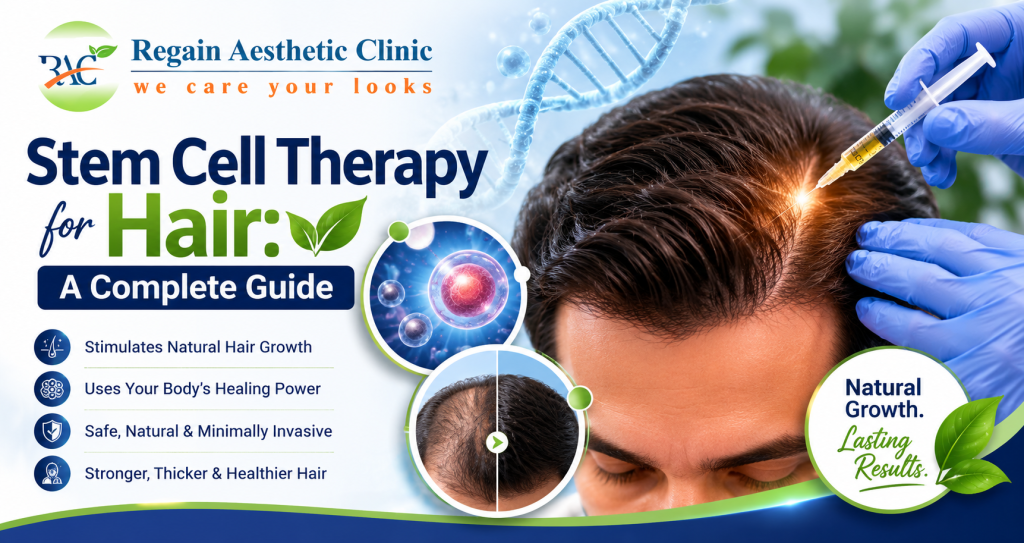
We draw a small amount of blood or harvest a tiny amount of fat tissue from the patient. We process this to concentrate the growth factors and stem cells within it. Then we inject that concentrated material into the areas of the scalp where hair has thinned.
The stem cells send signals to the dormant follicles around them. Blood circulation to the scalp improves. The follicle environment becomes more supportive of growth. Follicles that had stopped producing hair start again.
This is not a hair transplant. A transplant moves hair from one area to another. Stem cell therapy encourages the follicles already in the thinning area to become active again. Completely different approach.
Can Stem Cell Therapy Regrow Hair?
For the right patient, yes. And we’re careful about what “right patient” means.
Patients with dormant follicles respond well. Patients where follicles have been completely absent for many years, and the scalp has formed scar tissue where follicles once were, respond less predictably. We cannot regenerate follicles that are no longer there.
This is why we assess every patient before recommending treatment. We look at how long the hair loss has been progressing, what the scalp condition is, and whether follicles are dormant or gone. If we don’t think stem cell therapy will produce meaningful results for a specific patient, we say so before any procedure is booked. Not after.
Stem Cell Therapy for Hair Side Effects
We find patients are usually relieved when we explain this.
Because we use the patient’s own biological material, the body doesn’t react to it as foreign. Rejection risk is very low. Allergic reactions are rare.
What our patients experience after the procedure: soreness at the injection sites for a day or two, mild swelling, sometimes minor bruising. These settle on their own. We give clear aftercare instructions and patients manage this easily at home.
Infection is a potential risk with any injection procedure. We manage it through sterile technique and proper aftercare. Serious complications in our patients are uncommon.
Compare this to surgical hair restoration or systemic medications with hormonal effects. The side effect experience with stem cell therapy is considerably gentler.
What We Show Patients in Before and After Results
Stem cell therapy for hair loss before and after results follow a consistent pattern in our clinic.
- Weeks one to six, not much visible change. This is normal and we tell patients to expect it. The biological activity is happening underneath, but hair growth takes time.
- Around three months, most of our patients notice less hair coming out in the shower. Shedding reduces before new growth appears.
- Four to six months, new growth becomes visible. Areas that had been thinning start to look different. Density improves. Existing hair often gets thicker alongside new strands.
- Patients who photograph their scalp at monthly intervals are usually surprised by the change when they compare month one to month five. The improvement is gradual, but it adds up to something real.
We typically recommend two to three sessions spaced six to eight weeks apart. One session produces results. A course of sessions produces more.
What We Ask Patients to Do
Stop anti-inflammatory medication and aspirin a few days before treatment. These affect how the biological material works.
Come in with a clean scalp on the day. After treatment, leave the scalp alone for 24 hours and stay out of direct sun for a couple of days.
The most important thing we ask of patients is patience. This treatment works over months, not weeks. Patients who understand the timeline go through the process better and notice the results more clearly.
FAQs
Can stem cell therapy regrow hair?
For patients with dormant follicles, yes in many cases. For follicles absent for many years, results are less predictable. We assess each patient individually before recommending anything.
What are the side effects of stem cell therapy for hair?
Temporary soreness and mild swelling for a day or two. Serious side effects are uncommon. We use the patient’s own material so rejection risk is very low.
How many sessions do we recommend?
Usually two to three sessions for the initial course. Maintenance sessions afterward depending on how the scalp responds. We build the plan around what each patient’s assessment shows.
What We See in Our Patients Over Time
Month three, less shedding. Month five, new growth. Month six, patients come back to appointments saying people have started commenting on their hair.
The change is gradual. The result is real.
Regain Aesthetic provides stem cell therapy for hair with full scalp assessment before every treatment. We set a clear, honest timeline before any session starts. If hair thinning has been progressing and other treatments have stopped delivering, come and talk to us. That conversation is where the right plan starts.
Read More: