
Most people don’t wake up one day and decide to look into a hair transplant. It’s slower than that. You notice the lighting in a certain bathroom. You stop letting people take photos from behind. You try a few things that don’t really work. And eventually you start actually researching.
If that’s where you are, here’s what you should know and honestly, not just the good parts.
What Even Is FUE?
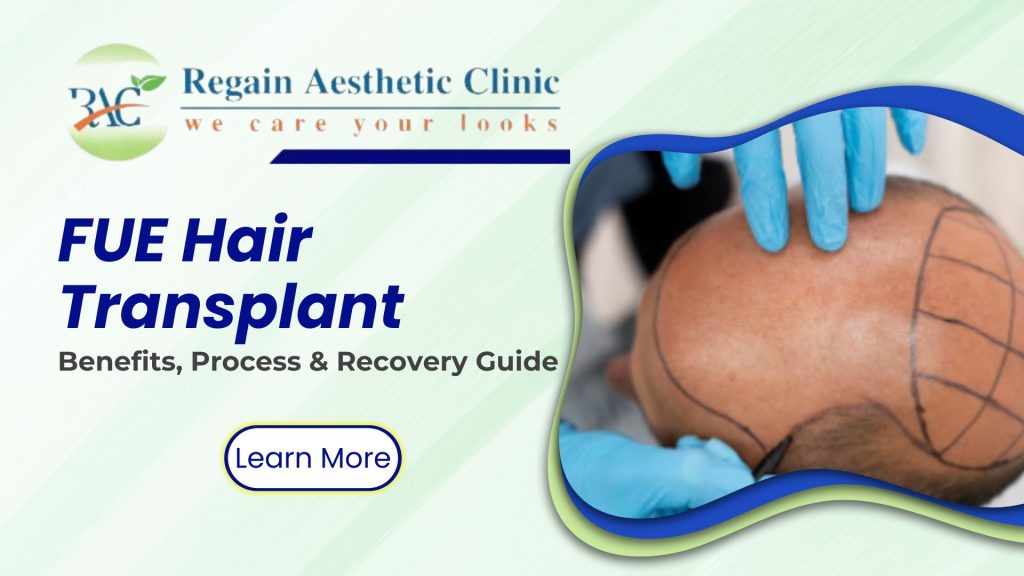
FUE — Follicular Unit Extraction, it is a procedure where individual hair follicles are taken from the back or sides of your scalp and moved into areas that are thinning or bald. That donor zone matters because hair there is genetically resistant to falling out. Move it, and it keeps that resistance. Permanently.
What made FUE take over from older methods is pretty simple: no strip of skin gets cut out. No long linear scar hidden under your hair. Just tiny circular extractions, scattered, that heal to near-invisible within weeks. For anyone who wants to keep their hair short, that difference is huge.
Why People Actually Choose It
Minoxidil works until you stop using it. Finasteride comes with side effects not everyone’s comfortable with. Concealers and fibres are fine until you’re caught in the rain. These aren’t solutions, they’re management strategies and they get exhausting.
FUE offers something different: you do it once, and the hair is yours permanently. Transplanted follicles grow like normal hair. You cut it, wash it, style it. No maintenance. No monthly spend. For people who’ve been quietly managing hair loss for years, that permanence hits differently.
The Actual Benefits Worth Knowing
No scarring you’ll need to hide. Short hair, shaved sides, none of it reveals anything after the donor area heals.
Results that look real. Follicles go in at the right angle, depth and direction to match your natural growth. When it’s done well, nobody can tell. When it’s done badly, you can always tell, which is exactly why the clinic and surgeon you choose matters more than most people realise going in.
Faster recovery than older techniques. Three to four days and most people are back at work. There’s swelling, tenderness, some scabbing but nothing that keeps you down for weeks.
Graft survival rates between 90 and 95 percent in a properly run procedure. That number isn’t fixed though. Rush the extraction, handle follicles carelessly, skip follow-up care and it drops. The technique is proven. The execution is what varies.
What a Proper Process Looks Like
Before anything gets booked, a real consultation means looking at your donor density, how far your hair loss has progressed, and this part gets skipped more than it should, where it’s likely going in the next ten years. A hairline designed for today can look strange a decade from now. Good planning accounts for that.
Extraction must be careful. Each follicle comes out individually with a small punch tool. It’s time-consuming for a reason. Clinics that move fast through this phase are the ones patients come back to for correction work.
Implantation is where you see the real skill. Angle, depth, natural direction, all of it. This isn’t something that should get handed off halfway through to whoever’s available.
Aftercare closes the loop. The follicles need proper care in the weeks after to establish well. Detailed instructions and actual follow-up aren’t extras; they’re part of the procedure.
Things Nobody Warns You About
Around three to four weeks after the procedure, the transplanted hair falls out. All of it, basically. First-timers who weren’t warned about this genuinely panic, but you should not. The follicle is still there, it’s just resting. Growth starts again from around month three.
Full results take twelve months. Early growth shows around three months, real density around six. There’s no faster timeline. Going in knowing that saves a lot of unnecessary anxiety during the wait.
Grafts typically range from 1,500 to 4,000 depending on how much area you’re covering. Larger cases sometimes need two sessions. Worth knowing before you start, not after.
Quick FAQs
Does it hurt?
The anaesthetic injections are uncomfortable. After that — pressure, not pain.
Is it actually permanent?
Yes. Established follicles don’t behave like the hair you lost.
When will I see results?
Three months for early signs, six for density, twelve for the full picture.
Can it go wrong?
Yes — mostly when the wrong clinic does it. That’s the real risk.
Final Thought
FUE works. The evidence is solid and the results, when handled properly, are permanent and natural. What actually determines your outcome isn’t the technique, it’s the team, the planning, and whether anyone’s being straight with you about what’s realistic.
At Regain Aesthetic, the conversation happens before anything gets scheduled. Because a decision this permanent deserves honesty first.
Read More:
- Introduction: Why Hair Treatment Matters Today?
- Lip Fillers Meaning: Everything You Need to Know Before Getting Them
- Botox Hair Treatment: Everything You Need to Know for Smooth, Frizz-Free Hair
Visit Us:
