
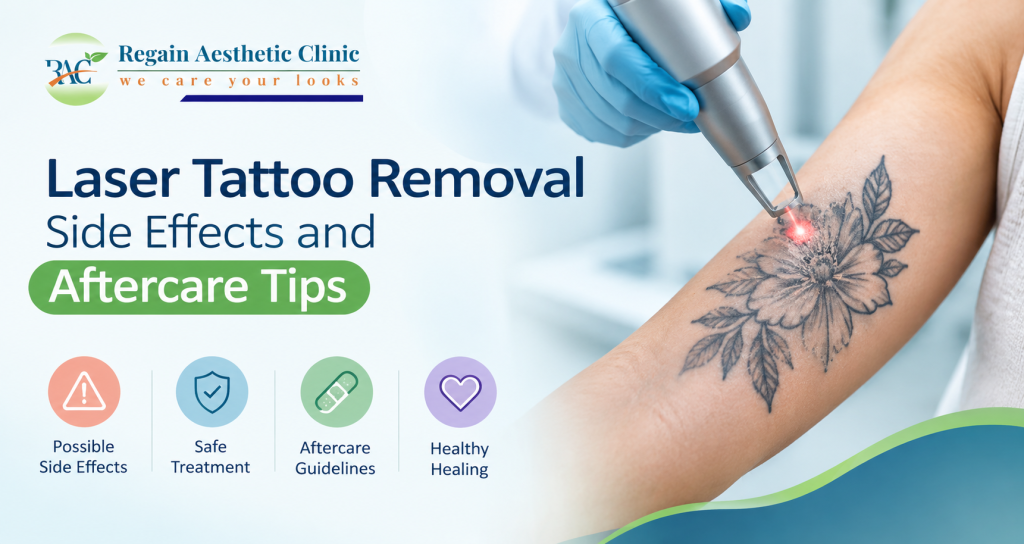
A tattoo may mark a milestone, but preferences change. Understanding side effects and aftercare helps set realistic expectations. The treatment uses focused light energy to break tattoo ink into smaller particles, which the body gradually clears.
At Regain Aesthetic Clinic, a consultation can assess your tattoo and skin. Results vary, so a qualified professional should guide your plan.
How Does Laser Tattoo Removal Work?
Laser tattoo removal directs short pulses of light towards tattoo pigment in the skin. The ink particles are fragmented, then gradually removed by the body’s natural processes. Several sessions are usually needed as ink clears gradually and skin recovers between treatments.
Session needs depend on tattoo size, ink colour, depth, age, location, application method, skin tone, and medical history.
Common Laser Tattoo Removal Side Effects
Temporary skin reactions are common after treatment. Severity varies by tattoo and individual skin response.
Redness and swelling: The treated area may look red, feel warm, or become mildly swollen. These effects often settle within a few days.
Tenderness or a stinging sensation: The skin can feel similar to a mild sunburn. Gentle care and following your clinician’s instructions can help manage discomfort.
Blistering or scabbing: Small blisters or crusts may develop as the skin heals. Do not pop blisters, scratch the area, or pull off scabs, as this can increase the risk of infection and scarring.
Temporary pigment changes: The treated skin may become lighter or darker than the surrounding area. These changes often improve over time, but occasionally they can persist.
Infection or scarring: These are less common, but risk increases when aftercare instructions are ignored, the area is picked, or treatment is unsuitable. Seek professional advice if you notice worsening pain, spreading redness, pus, fever, or delayed healing.
Tell your provider about medications, scarring tendencies, and skin conditions to help reduce avoidable risks.
Laser Tattoo Removal Aftercare Tips
Aftercare matters. Follow your clinic’s instructions, which may be tailored to your skin.
Before your appointment, avoid tanning and tell the clinic about recent sun exposure. Share details of previous tattoo removal, allergic reactions to tattoo pigments, and any medicines or supplements you take. Do not stop prescribed medication without advice. Ask what healing should look like, whom to contact after hours, and whether your work or exercise routine needs temporary adjustments. Taking a clear photograph before each session can also help you compare fading over time without expecting dramatic changes after one visit, while tracking any unusual skin changes.
1. Keep the Area Clean
Wash your hands before touching the treated skin. Clean the area gently as instructed, using mild products and avoiding rubbing. Pat it dry rather than scrubbing with a towel.
2. Protect the Skin
If a dressing is recommended, change it as directed. Use only the ointment or moisturiser advised by your clinician. Avoid applying perfumes, exfoliants, acids, or unprescribed creams to the healing area.
3. Never Pick Blisters or Scabs
Allow the skin to heal naturally. Picking can reopen the wound, delay recovery, raise infection risk, and contribute to scarring or uneven pigmentation.
4. Limit Sun Exposure
Protect the area from direct sunlight while it heals. Once the skin has closed, use broad-spectrum sunscreen as advised and cover the area when outdoors. Tanned or sunburned skin may complicate treatment, so ask your provider how to prepare before the next session.
5. Avoid Friction and Intense Heat
Until the area has healed, avoid tight clothing that rubs the site, swimming pools, hot tubs, saunas, and activities that cause heavy sweating if your clinician recommends avoiding them. These can irritate healing skin.
6. Follow Your Session Schedule
Do not rush into another session. Allow time for recovery and ink clearance. Attend follow-ups and ask your clinic when the area is ready.
Can Laser Fully Remove a Tattoo?
Laser treatment can fade many tattoos substantially, and some become barely visible. However, complete removal cannot be guaranteed. Certain ink colours, dense or layered designs, deep pigment, and older or amateur tattoos may respond differently. A faint outline, residual colour, or texture change can remain even after multiple sessions.
Ask about incomplete fading, pigment changes, and scarring. Be cautious of promises of perfect removal.
Can a Tattoo Be 100% Removed?
Sometimes a tattoo may become difficult to notice, but 100% removal is not assured for everyone. The result depends on ink composition, skin response, tattoo placement, and treatment settings. An assessment can clarify whether fading, partial removal, or a staged approach is realistic.
Is Tattoo Removal Very Painful?
People describe the sensation differently. It is often compared with a quick rubber-band snap or repeated pinpricks against the skin. Discomfort depends on the tattoo’s location, size, density, and personal sensitivity. A clinic may offer cooling or other appropriate comfort measures. Discuss pain concerns beforehand; use numbing products only if approved by your provider.
When Should You Contact Your Clinic?
Mild redness, swelling, and tenderness can be expected, but symptoms should gradually improve. Contact your clinician for increasing pain, warmth, spreading redness, discharge, fever, or concerning blisters. Seek urgent care for severe symptoms or a serious allergic reaction.
Is Laser Tattoo Removal Right for You?
Laser tattoo removal may be an option if you want to fade an unwanted tattoo or prepare it for a cover-up. The safest approach begins with an individual assessment, realistic expectations, and careful aftercare. Tell your provider about current medicines, pregnancy, skin conditions, previous scarring, and any history of poor wound healing before treatment.
Book a Tattoo Removal Consultation
Considering laser tattoo removal? Regain Aesthetic Clinic can help you understand the process, possible side effects, aftercare requirements, and expected results for your tattoo. Book a consultation to discuss your goals and receive advice tailored to your skin. Your treatment plan should prioritise safety, informed decisions, and gradual healing—not unrealistic promises.
Read More:

