
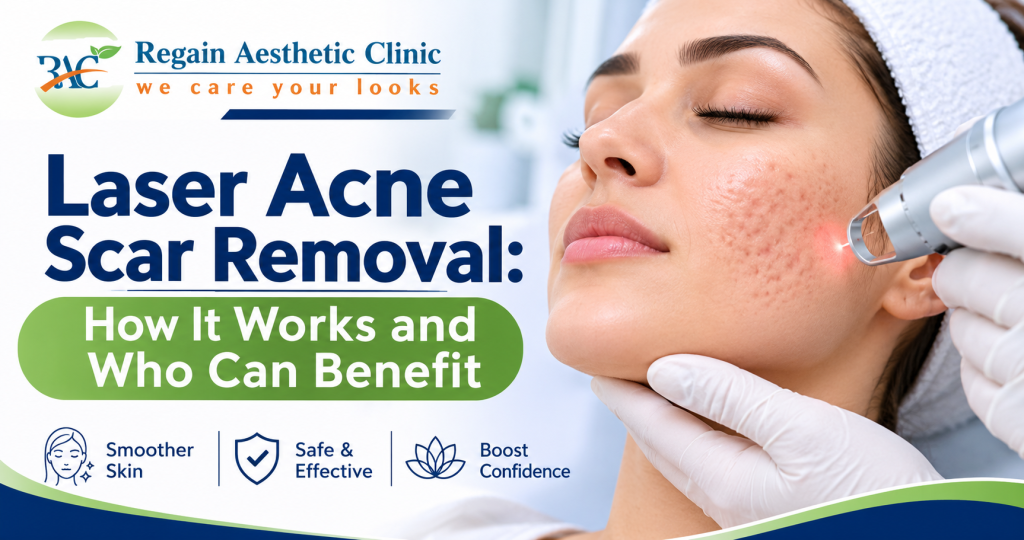
Acne may disappear, but uneven texture, visible pits and discoloration can remain. If home care has not delivered the change you want, laser acne scar removal may be worth discussing with a skin specialist.
Laser treatment can encourage collagen renewal, smooth uneven texture and reduce certain colour changes. The right approach depends on scar type, skin tone, acne activity and expectations.
What Is Laser Acne Scar Removal?
Laser acne scar removal is a dermatological procedure that uses focused light energy to improve the appearance of scars left by acne. Depending on the device and settings, treatment may remove tiny portions of damaged skin, stimulate collagen beneath the surface or target redness and pigmentation.
Brown or red post-acne marks are colour changes; depressed or raised scars involve structural changes. They may need different treatments, so assessment comes first.
How Does Laser Treatment Work?
The laser delivers controlled energy to selected skin depths. Resurfacing encourages collagen formation and gradual remodelling, which may make depressions less noticeable and texture smoother.
Non-ablative lasers heat tissue without removing the outer skin. Ablative lasers remove controlled layers and generally need more recovery. Fractional devices treat microscopic columns while leaving surrounding tissue intact. Selection requires individual assessment.
Which Acne Scars Can Benefit?
No single laser suits every scar.
- Rolling scars: Broad, shallow depressions may look softer as collagen is remodelled. Some tethered scars may also need subcision.
- Boxcar scars: Defined depressions can improve with resurfacing, although deeper edges may require combination treatment.
- Ice-pick scars: Narrow, deep pits are challenging and may respond better to targeted techniques such as TCA CROSS or other specialist procedures, sometimes alongside laser.
- Post-acne redness: Selected vascular lasers may reduce persistent red marks.
- Dark marks: Pigment-targeting options may help in suitable cases, but darker skin tones need careful settings to reduce the risk of pigmentation changes.
Raised scars and keloids require a different assessment and may need injections or other therapies rather than resurfacing alone.
Who Is a Suitable Candidate?
Adults with established scars and realistic expectations may be candidates. Active acne is usually controlled first to prevent new scars. A dermatologist considers scar depth, skin tone, medical history, medicines, pigmentation tendency and recovery time.
Active infection, inflamed acne, some skin conditions or certain medicines may mean postponing treatment. Share all medicines and skincare products with the clinician. Never stop prescriptions without medical advice.
What Influences Your Results?
Your outcome is shaped by more than the laser itself. Scar age and depth, collagen loss, skin tone, healing pattern and whether acne is controlled all matter. Treatment settings must be chosen: energy that is too aggressive can increase irritation or pigmentation risk, while conservative settings may require additional visits. Lifestyle and consistent daily aftercare influence recovery. Avoid tanning, protect treated skin from sunlight and attend review appointments. Share a history of cold sores, keloids, unusual scarring or reactions before treatment. These details help the clinician weigh benefits against risks and decide whether laser alone, another procedure or a combined plan is more appropriate. A personalised plan is better than copying someone else’s treatment schedule or expecting before-and-after results.
Can Laser Treatment Remove Acne Scars Completely?
Complete removal cannot be guaranteed. Laser treatment can make scars less visible and improve texture, but results vary with scar type, depth, skin response and treatment plan.
Deep scars may remain visible after several sessions. Combination treatment may work better. A consultation should explain likely improvement, limitations, costs and alternatives.
How Painful Is Acne Laser Treatment?
Sensation varies with the laser and intensity. People commonly describe warmth, prickling or snapping. Numbing cream may be used; intensive resurfacing can cause more discomfort and require longer recovery.
Temporary redness, warmth, swelling or tenderness may follow. Follow aftercare instructions and contact the clinician if pain is severe, symptoms worsen or infection is suspected.
Is Laser 100% Safe?
No medical procedure is 100% risk-free. Qualified dermatological care and appropriate settings reduce risks. Possible effects include redness, swelling, crusting, burns, infection, scarring and skin-colour changes.
Pigmentation changes are an important consideration, particularly for deeper skin tones. Consultation, test spots when advised, suitable devices, trained supervision and sun protection help reduce risks. Avoid unqualified operators.
What Happens During Treatment and Recovery?
The appointment includes skin assessment and goal-setting. After cleansing, protective eyewear is provided and numbing may be applied before the selected areas are treated. Session length depends on technique and scar extent.
Recovery varies. Non-ablative procedures may have limited downtime; ablative resurfacing can need several days or longer. Use gentle recommended skincare, avoid scrubbing, moisturise as directed and apply broad-spectrum sunscreen. Pause active ingredients until cleared by your clinician.
How Many Sessions Are Needed?
There is no fixed number. Some people need sessions several weeks apart or combined procedures. Collagen remodelling takes time, so results may develop over months. Your clinician should review progress and adjust the plan.
Why Choose a Personalised Acne Scar Treatment Plan?
Good care begins by identifying the scar pattern. At Regain Aesthetic Clinic, a consultation can explain suitable options, expected improvement, downtime and aftercare. Ask who performs the procedure and how your skin tone and history affect settings.
If acne scars affect your confidence, seek an assessment before trying another trend-led treatment. The goal is healthier-looking skin through a realistic, individualised plan.
FAQs:
Can laser treatment remove acne scars completely?
It can significantly reduce the appearance of some scars, but complete removal is not guaranteed. Results depend on scar type, depth and individual skin response.
How painful is acne laser?
Most people experience warmth, prickling or snapping sensations. Numbing options may improve comfort, while stronger resurfacing treatments can cause more discomfort.
Is laser 100% safe?
No. Temporary redness and swelling are common possibilities, and complications such as pigmentation changes, burns or infection can occur. Qualified assessment and proper aftercare reduce risk.
When will I see results?
Improvement develops gradually as the skin heals and collagen remodels. Your clinician can explain a realistic timeline for the treatment selected.
Read More:
