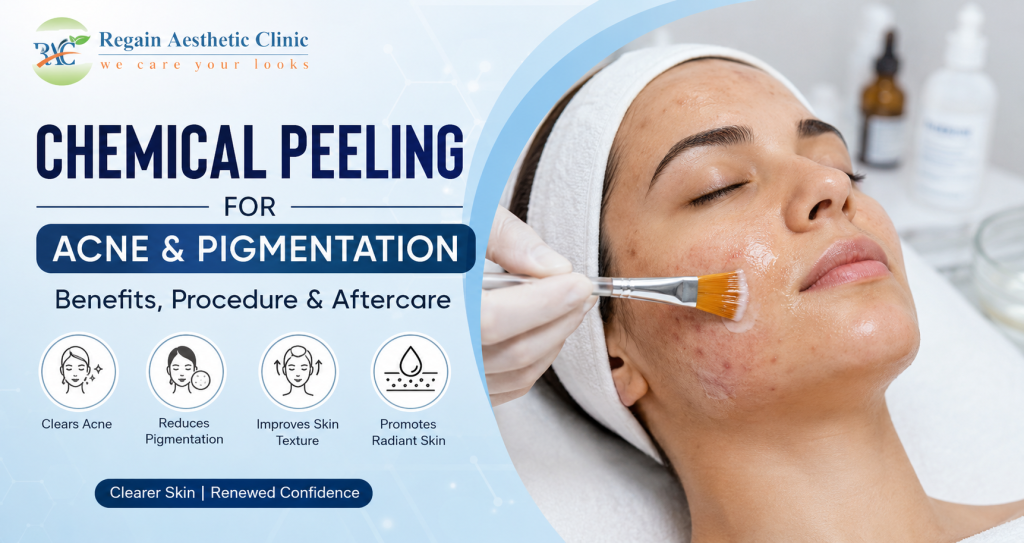
Acne, dark spots and uneven skin tone are common concerns that can affect both appearance and confidence. When regular skincare does not provide the desired improvement, chemical peeling for acne and pigmentation may be considered as a professional treatment option.
Chemical peeling uses a specially selected solution to exfoliate the skin in a controlled manner. Depending on the peel used, it can help improve acne-prone skin, post-acne marks, pigmentation and uneven texture. However, the right treatment should always be selected according to individual skin type and concerns.
What Is Chemical Peeling for Acne and Pigmentation?
A chemical peel is a professional skin treatment that uses carefully selected acids or chemical agents to remove damaged surface skin cells. This controlled exfoliation encourages the skin to renew itself and can result in a smoother and more even-looking complexion.
For acne-prone skin, certain peels can help reduce the buildup of dead cells and excess oil that contributes to clogged pores. For pigmentation, peeling may help improve the appearance of superficial dark spots and post-acne marks.
Since every person’s skin reacts differently, a professional skin assessment is important before treatment.
Benefits of Chemical Peeling for Acne and Pigmentation
1. Helps Improve Acne-Prone Skin
Certain chemical peels can provide controlled exfoliation and help improve the appearance of clogged pores, excess oil and mild acne. For persistent or severe acne, a peel may be used alongside other dermatologist-recommended treatments.
2. Reduces the Appearance of Acne Marks
Pimples can disappear while leaving behind dark marks. These post-acne marks can take considerable time to fade naturally. A suitable professional peel may help improve the appearance of superficial pigmentation over a series of treatments.
3. Improves Uneven Skin Tone
Sun exposure, acne and inflammation can cause an uneven complexion. Chemical exfoliation can remove some damaged surface cells and help the skin look brighter and more uniform.
4. Smoothens Skin Texture
Accumulated dead skin cells can make the complexion appear rough or dull. Chemical peeling can improve surface texture, leaving the skin feeling smoother and looking refreshed.
5. Supports Overall Skin Rejuvenation
Depending on the type and depth of the peel, treatment may also help improve the appearance of fine surface lines and mild textural irregularities.
Which Chemical Peel Is Best for Acne and Pigmentation?
There is no single chemical peel that works best for everyone. The choice depends on the skin concern, sensitivity, pigmentation level and treatment goals.
Common ingredients used in professional peels include:
- Salicylic acid: Often selected for oily and acne-prone skin.
- Glycolic acid: Used for surface exfoliation, texture and uneven tone.
- Lactic acid: A milder exfoliating option that may suit selected sensitive skin types.
- TCA: Used at different strengths for specific concerns and requires professional supervision.
The concentration and treatment frequency should be decided by a qualified professional. A stronger peel does not necessarily mean better results.
Chemical Peel Procedure: What to Expect
Step 1: Skin Assessment
Your skin professional examines your skin and discusses your acne, pigmentation, skincare routine, medications and previous treatments.
Step 2: Skin Preparation
Depending on the planned peel, you may receive instructions regarding skincare products and sun exposure before the appointment.
Step 3: Cleansing
The face is gently cleansed to remove makeup, oil and other impurities.
Step 4: Peel Application
The selected chemical solution is applied carefully to the required area. You may experience mild warmth, tingling or stinging during this stage.
Step 5: Completion of Treatment
The peel is removed or neutralised according to the product being used. A soothing moisturiser or other recommended product may then be applied.
Step 6: Aftercare Instructions
You will receive guidance about cleansing, moisturising, sunscreen and which skincare products should be avoided temporarily.
Chemical Peel Aftercare: Dos and Don’ts
Proper aftercare helps minimise irritation and supports healthy recovery.
What You Should Do
- Use a gentle cleanser.
- Keep your skin moisturised.
- Apply broad-spectrum sunscreen regularly.
- Limit unnecessary sun exposure.
- Follow the skincare routine recommended by your professional.
- Allow naturally peeling skin to shed without interference.
What You Should Avoid
- Scrubbing or exfoliating the treated area.
- Picking or pulling flaky skin.
- Using strong active ingredients without professional advice.
- Excessive sun exposure.
- Tanning.
- Immediately undergoing other irritating skin treatments.
Never try to speed up the peeling process by rubbing or removing the skin manually.
How Long Does Chemical Peel Recovery Take?
Recovery depends on the type and strength of the peel. A superficial peel may cause temporary redness, dryness or mild flaking, while stronger treatments can require more recovery time.
Not every effective peel causes dramatic visible peeling. The amount of flaking does not determine the success of treatment.
Your skin professional can explain the expected recovery period before the procedure.
Is Chemical Peeling Safe for Indian Skin?
Chemical peels can be used for many Indian skin types when appropriately selected and professionally performed. However, medium to deeper skin tones can be more susceptible to pigmentation following inflammation or irritation.
For this reason, professional assessment is particularly important when treating pigmentation. The correct peel, concentration and treatment interval can help reduce unnecessary irritation.
How Many Chemical Peels Are Needed?
The number of sessions varies from person to person. Factors such as acne severity, pigmentation, skin sensitivity, peel type and individual response all influence the treatment plan.
Some people may see improvement after an initial session, while others may benefit from a series of treatments spaced appropriately.
FAQs:
Can chemical peeling remove acne permanently?
No. Chemical peeling may help manage certain acne-related concerns, but it does not guarantee permanent prevention of acne. Ongoing acne may require a broader treatment plan.
Can chemical peels permanently remove pigmentation?
Chemical peels can improve certain types of pigmentation, but pigmentation may return if the underlying cause continues. Sun protection is an important part of maintaining results.
Can chemical peeling remove acne scars?
It may improve the appearance of some superficial acne scars and uneven texture. Deeper scars may require other procedures or a combination treatment approach.
Can I use skincare products after a chemical peel?
Use only the products recommended by your skin professional during recovery. Strong exfoliants and active ingredients may need to be paused temporarily.
Is Chemical Peeling Right for You?
Chemical peeling for acne and pigmentation can be a useful professional option for improving acne-prone skin, post-acne marks, uneven pigmentation and surface texture. However, successful treatment depends on choosing the appropriate peel for your individual skin rather than simply selecting the strongest option.
At Regain Aesthetic Clinic, professional skin assessment can help determine whether chemical peeling is suitable for your concerns. If acne, pigmentation or post-acne marks are affecting your confidence, consult a qualified skin professional for a personalised treatment plan.
The right diagnosis, suitable treatment and consistent aftercare are the foundation of healthier-looking skin.
Read More: