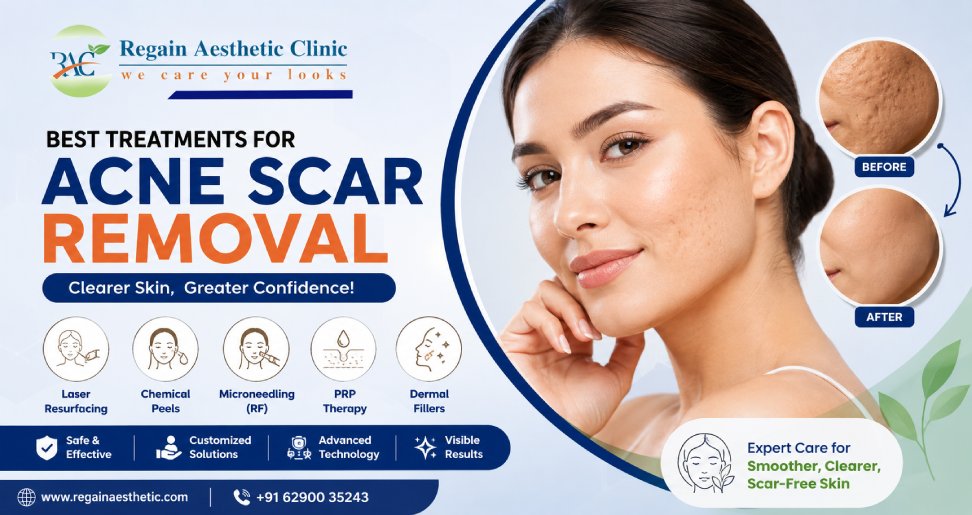
Acne scars can remain long after active acne has disappeared, affecting the texture, tone, and overall appearance of the skin. Fortunately, modern dermatology offers several effective treatments for acne scar removal, ranging from chemical peels and microneedling to laser procedures and advanced skin therapies. The right treatment depends on the type of scar, skin condition, severity, and individual goals.
At Regain Aesthetic, advanced aesthetic and dermatological solutions are tailored to individual skin concerns. With professional assessment and personalized treatment plans, the goal is to improve acne scars while helping the skin look smoother, healthier, and more even.
What Causes Acne Scars?
Acne scars generally develop when inflammation from acne damages the deeper layers of the skin. Picking, squeezing, or repeatedly irritating acne can increase the risk of permanent scarring.
Common types of acne scars include:
- Ice-pick scars: Small, deep scars that extend into the skin.
- Boxcar scars: Broad depressions with defined edges.
- Rolling scars: Uneven, wave-like depressions caused by damage beneath the skin.
- Post-acne marks: Dark or reddish spots that may remain after acne heals.
Because different scars require different approaches, professional skin evaluation is important before selecting a treatment.
Best Treatments for Acne Scar Removal
1. Laser Skin Resurfacing
Laser treatment is one of the commonly used advanced options for improving acne scars. It uses controlled laser energy to remove damaged skin or stimulate collagen production, depending on the technology used.
As new collagen develops, the skin may gradually become smoother and more refined. Laser resurfacing can be particularly useful for certain types of textural scars and uneven skin.
A dermatologist or aesthetic specialist can determine whether fractional or another type of laser treatment is appropriate for your skin.
2. Microneedling
Microneedling is a minimally invasive treatment designed to stimulate the skin’s natural healing process. Very fine needles create controlled micro-injuries in the skin, encouraging collagen and elastin production.
Increased collagen can help improve the appearance of depressed acne scars and uneven skin texture over a series of sessions. Microneedling may also be combined with other professionally recommended treatments for enhanced results.
3. Chemical Peels
Chemical peels use carefully selected solutions to exfoliate damaged outer layers of the skin. Depending on the type and strength of the peel, they can help improve uneven pigmentation, rough texture, and certain superficial acne scars.
Milder peels may require several sessions, while stronger treatments require more careful professional supervision. The appropriate peel should always be selected according to your skin type and concern.
4. Fractional Radiofrequency Treatments
Radiofrequency-based skin treatments use controlled energy to stimulate collagen remodeling in deeper layers of the skin. Fractional technologies can be useful for improving skin texture and the appearance of certain depressed acne scars.
One advantage of these treatments is that they can target specific areas while supporting gradual skin rejuvenation. The number of sessions required varies according to scar severity and individual response.
5. Subcision
Subcision is particularly useful for certain rolling acne scars that are attached to deeper tissues beneath the skin.
During the procedure, a specialist carefully releases the fibrous bands pulling the scar downward. This allows the depressed area to become more level with the surrounding skin. Subcision may sometimes be combined with other acne scar treatments for a more comprehensive approach.
6. Dermal Fillers
Some depressed acne scars may be improved with carefully placed dermal fillers. Fillers can temporarily add volume beneath selected scars, making the skin surface appear more even.
This approach is not suitable for every type of acne scar. A qualified professional should assess the scar structure and determine whether fillers are appropriate.
7. Combination Acne Scar Treatments
Acne scars are often mixed, meaning one person may have rolling, boxcar, and pigmentation-related concerns at the same time. In such cases, using only one treatment may not provide the desired improvement.
A customized combination approach may involve procedures such as microneedling, laser resurfacing, chemical peels, subcision, or other dermatologist-recommended treatments. Combining techniques allows different aspects of scarring to be addressed more specifically.
How to Choose the Right Acne Scar Treatment
There is no single treatment that works equally well for every person. A professional assessment should consider:
- Type and depth of acne scars
- Skin type and sensitivity
- Skin pigmentation
- Presence of active acne
- Previous treatments
- Expected recovery time
- Desired results
- Overall skin health
For this reason, avoiding self-treatment or aggressive home procedures is important. Professional guidance can help reduce the risk of irritation, pigmentation changes, or worsening scars.
Why Choose Regain Aesthetic for Acne Scar Treatment?
Choosing the right clinic is an important part of your skin-care journey. Regain Aesthetic focuses on personalized aesthetic and dermatological care, helping patients understand their skin concerns and explore suitable treatment options.
Instead of following a one-size-fits-all approach, treatment can be planned according to the individual’s scar type, skin condition, and aesthetic goals. Professional evaluation also helps determine whether a single procedure or a combination treatment plan is more appropriate.
If acne scars are affecting your confidence or making your skin texture difficult to manage, consulting the experts at Regain Aesthetic can be a useful first step toward developing a personalized skin-rejuvenation plan.
How Many Sessions Are Needed?
The number of sessions depends on the severity and type of acne scars and the treatment selected. Some procedures may show improvement after an initial session, while collagen-stimulating treatments often require multiple sessions spaced several weeks apart.
Results also develop gradually because collagen remodeling takes time. Your specialist can recommend a suitable treatment schedule after evaluating your skin.
How to Maintain Results After Treatment
Post-treatment skin care plays an important role in maintaining improvements. Depending on the procedure, your specialist may recommend:
- Applying sunscreen regularly
- Avoiding excessive sun exposure
- Using gentle skin-care products
- Keeping the skin properly moisturized
- Avoiding picking or scratching the skin
- Following all post-treatment instructions
- Managing active acne to prevent new scars
Consistent sun protection is particularly important because UV exposure can make pigmentation and post-acne marks more noticeable.
Frequently Asked Questions ( FAQs ) :-
Ans :- Complete removal cannot always be guaranteed. However, appropriate professional treatments can significantly improve the appearance, depth, and texture of many acne scars.
Ans :- Deep scars may require procedures such as laser resurfacing, microneedling, subcision, or combination treatments. The best option depends on the specific scar type.
Ans :- The level of discomfort varies according to the procedure. Many professional treatments use topical numbing or other comfort measures when appropriate.
Ans :- Active acne may need to be controlled before certain scar treatments are performed. A professional consultation can help determine the safest treatment sequence.
Conclusion
The best treatments for acne scar removal depend on the type of scar, skin condition, and individual treatment goals. Options such as laser resurfacing, microneedling, chemical peels, radiofrequency treatments, subcision, fillers, and combination therapies can help improve uneven texture and visible scarring.
Rather than choosing a treatment based solely on online recommendations, consult a qualified skin-care professional for an individualized assessment. Regain Aesthetic provides personalized aesthetic solutions designed around your specific skin concerns and goals. With the right treatment plan and consistent skin care, smoother and more confident-looking skin may be achievable.