
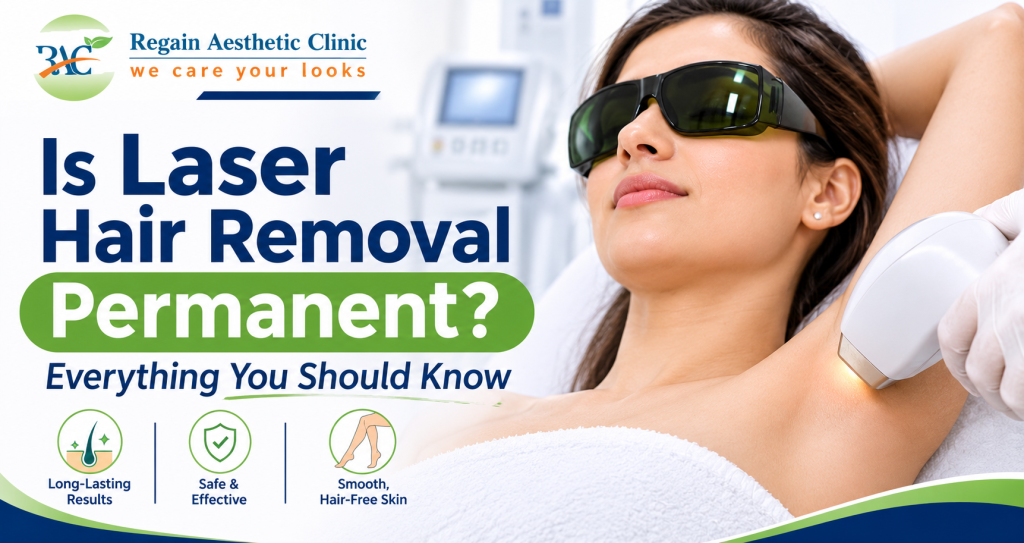
Unwanted hair can turn shaving, waxing and threading into a repetitive part of your routine. Laser hair removal offers a longer-lasting option, but does it mean you will never see hair again? The honest answer is that treatment can provide long-term hair reduction, while complete, lifelong removal cannot be guaranteed.
What Is Laser Hair Removal?
Laser hair removal is a professional treatment that uses concentrated light to target pigment (melanin) in hair. The light becomes heat and damages the follicle, slowing its ability to produce new hair. Because the laser works best on follicles in an active growth phase, several sessions are needed to treat hairs at different stages.
Results depend on hair colour and thickness, skin tone, treatment area, device and settings. Darker, coarser hair often responds better than blonde, white, grey or red hair, which may contain too little suitable pigment.
Is Laser Hair Removal Permanent?
The phrase “permanent hair removal” can be misleading. Laser treatment can produce a lasting reduction in the number of hairs that regrow, but some follicles may recover and new growth can appear over time. Regrowth is often finer, lighter and less noticeable.
Hormonal changes, genetics and the treatment area influence how long results last. Facial hair affected by hormones may be particularly likely to need maintenance. A realistic goal is smoother skin with substantially less frequent hair removal—not a promise that every follicle is gone forever.
How Many Sessions Are Needed?
Most people need a course of treatments rather than one appointment. The exact number varies with the area, hair cycle, density, skin and hair characteristics, and response to treatment. Sessions are spaced several weeks apart so newly active follicles can be targeted. Your practitioner should set the interval and review progress rather than applying one schedule to everyone.
After the initial course, occasional maintenance sessions may help manage regrowth. Do not judge the final outcome immediately after one visit; hair sheds gradually and improvement builds across the treatment plan.
Is Laser Hair Removal 100% Safe?
No cosmetic procedure is completely risk-free. When the correct device and settings are selected and treatment is performed by a trained, experienced professional, laser hair removal is generally well tolerated. Temporary redness, swelling around follicles, warmth or mild discomfort can occur.
Less common complications include burns, blisters, infection, scarring and temporary or, rarely, lasting changes in skin colour. Risk can increase with unsuitable settings, recent tanning, inadequate eye protection or inexperienced operation. A consultation should assess your skin tone, medical history, medicines, tendency to scar and any active skin concerns. Ask who will perform the procedure and what experience they have with your skin type.
Is Laser Better Than Shaving?
It depends on what matters most to you. Shaving is quick, inexpensive and easy to do at home, but it cuts hair at the skin surface, so stubble returns quickly and repeat shaving is needed. Nicks, razor burn and ingrown hairs can also occur.
Laser requires more planning and upfront cost, and it can cause temporary irritation. In return, it may substantially reduce hair growth for months or years and reduce the need for frequent shaving. Some people choose shaving for convenience; others prefer longer-term reduction. The better option is the one that suits your skin, budget, schedule and expectations.
Who Can Benefit From Laser Hair Removal?
People bothered by recurring hair on areas such as the underarms, legs, face, back, chest or bikini line may consider treatment. Modern laser options can be used across a range of skin tones, but the wavelength and settings must be chosen carefully. Darker skin needs an operator familiar with appropriate technology and safe parameters.
Very light, grey, white or red hair may respond poorly. If excess facial or body hair is linked to a hormonal condition, medical assessment may be useful because the underlying cause can continue to stimulate growth. Pregnancy, certain medicines, recent tanning, tattoos in the treatment area and active skin conditions should be discussed before booking.
How to Prepare and Care for Your Skin
Follow the clinic’s specific instructions. You may be advised to avoid tanning and sun exposure, use sunscreen, and stop waxing, plucking or threading for a period before treatment because the follicle needs to remain present. Shaving is commonly recommended shortly before a session; confirm the timing with your provider.
After treatment, protect the area from sun, use gentle skincare and avoid rubbing, harsh exfoliants or heat if advised. Do not pick at treated skin. Contact your provider if you develop severe pain, blistering, spreading redness or signs of infection.
Choosing a Clinic: Questions Worth Asking
A careful consultation matters as much as the device. Ask which laser is suitable for your skin and hair, who operates it, how many sessions may be needed, what results are realistic, what side effects are possible and whether maintenance is likely. A responsible provider will explain limitations, review your medical history and never guarantee permanent results. Protective eyewear and clear pre- and post-treatment instructions should be part of care.
FAQs:
Does laser hair removal is permanent?
Laser hair removal can create long-term hair reduction, and some treated follicles may stop producing hair. However, regrowth is possible, so maintenance may be needed.
Is laser hair removal 100% safe?
No treatment is risk-free. Temporary redness and swelling are possible, while burns, pigment changes, infection and scarring are less common risks. Professional assessment and suitable settings help reduce complications.
Is laser better than shaving?
Laser may offer longer-lasting reduction and less frequent hair removal. Shaving is cheaper, immediate and accessible, but results are short-lived. Your priorities determine which is better.
Take the Next Step
If frequent shaving or waxing is frustrating, a personalised consultation can help you understand whether laser hair removal is appropriate. At Regain Aesthetic Clinic, discuss your skin and hair characteristics, expected results, safety precautions and possible maintenance before choosing a plan. Informed decisions—not unrealistic promises—are the foundation of confident, well-managed treatment.
Read More:

