
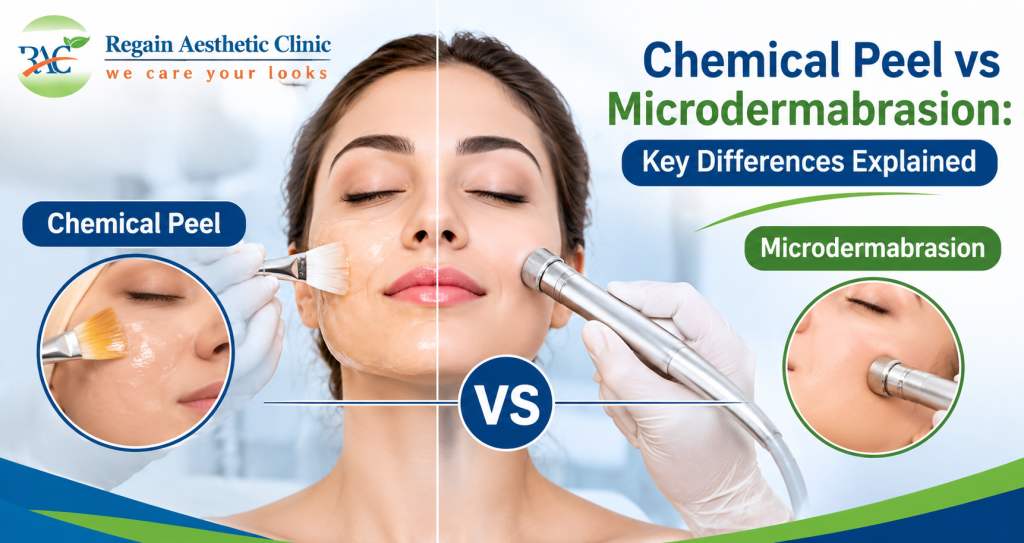
Choosing a skin treatment can feel confusing when both promise a smoother, brighter complexion. Chemical peels and microdermabrasion are popular exfoliating procedures, but they work differently and address different concerns. Your choice depends on skin type, goals and recovery time. A clear comparison helps you make an informed choice.
What Is a Chemical Peel?
A chemical peel uses a carefully selected chemical solution to exfoliate the skin. Its strength determines how deeply it exfoliates. Common ingredients include alpha hydroxy acids, such as glycolic acid, and beta hydroxy acids, such as salicylic acid.
Superficial peels may help with dullness, uneven tone, mild pigmentation, fine lines and some forms of acne. Medium-depth peels address selected concerns more intensively and involve more recovery. Deep peels require specialist assessment. A qualified professional must select the type and strength.
What Is Microdermabrasion?
Microdermabrasion is a non-invasive mechanical exfoliation procedure. A handheld device gently abrades the outermost layer of dead skin cells. It can leave skin smoother with little downtime.
Because it works mainly at the surface, microdermabrasion is generally suited to mild roughness, dullness, uneven texture and some superficial discolouration. It does not remodel deeper scars or treat every cause of pigmentation. Results are temporary and may require repeat sessions.
Chemical Peel vs Microdermabrasion: What Is the Difference?
The main difference is the method of exfoliation. A chemical peel uses a solution to loosen and remove skin cells; microdermabrasion physically buffs away surface cells. A peel can be tailored to different depths and concerns, while microdermabrasion is typically a more superficial treatment.
Peels may be useful for selected pigmentation, fine lines and some acne-related concerns. Microdermabrasion is often chosen for surface dullness and rough texture when minimal downtime is preferred. Your skin condition and treatment goals determine which approach is appropriate.
Which Treatment Is Better for Blackheads?
Blackheads are open comedones formed when pores become clogged with oil and dead skin cells. A salicylic-acid peel may help some people because salicylic acid can penetrate oil within pores. However, a peel does not guarantee that all blackheads will disappear, and ongoing acne care may be needed.
Microdermabrasion may temporarily improve the feel and appearance of congested surface skin, but it is not a complete blackhead treatment.
Do Dermatologists Recommend Chemical Peels?
Dermatologists may recommend chemical peels when the peel type matches the concern and the person’s skin can tolerate it. They are used for selected cases of acne, uneven pigmentation, sun damage, dullness and fine lines. Suitability is individual.
People with darker skin can develop post-inflammatory pigmentation if the peel is too strong or poorly selected, so experience with diverse skin tones matters. Strong at-home peels can cause burns and lasting injury.
What Are Five Disadvantages of Microdermabrasion?
Microdermabrasion is generally well tolerated, but it has limitations and possible downsides:
- Temporary results: Smoothness and brightness do not last indefinitely; maintenance may be needed.
- Multiple appointments: A visible change may require a series of sessions, increasing time and overall cost.
- Limited depth: It mainly treats the surface and is unlikely to improve deep acne scars or pronounced wrinkles.
- Short-term irritation: Redness, swelling, dryness, stinging or sensitivity can occur after treatment.
- Pigmentation or skin injury risk: Incorrect technique or unsuitable skin conditions can contribute to bruising, burns or dark marks, particularly in people prone to post-inflammatory pigmentation.
Chemical Peel vs Microdermabrasion: Recovery and Aftercare
After microdermabrasion, mild redness or sensitivity may settle within a day or two, and many people return to normal activities quickly. A superficial peel may cause temporary tightness, flaking or redness. Medium or deeper peels can involve more noticeable peeling and longer downtime.
Avoid picking or scrubbing peeling skin. Pause retinoids, exfoliating acids and other active products for the period advised by your provider. Contact the clinic if you develop severe pain, blistering, increasing redness or signs of infection.
Both procedures can be part of a broader skincare plan, but they should not be layered casually. Combining exfoliating treatments too close together may increase irritation and disrupt the skin barrier. Tell your provider about retinoids, acne products, recent waxing and previous treatments so they can recommend a safe interval and suitable preparation beforehand.
Who Should Avoid or Delay These Treatments?
Treatment may need to be postponed if you have sunburn, an active skin infection, open wounds or significant irritation. A history of cold sores, keloid scarring, eczema, rosacea, recent isotretinoin use or medicines that affect healing should be discussed beforehand. Do not stop prescribed medication without medical advice.
How to Choose the Right Treatment
Start with the concern you want to improve: blackheads, pigmentation, roughness, dullness or fine lines. Ask about realistic results, session numbers, risks and alternatives.
At Regain Aesthetic Clinic, a personalised skin assessment can help you understand the options rather than choosing a procedure based only on social media trends.
FAQs:
Will a chemical peel remove blackheads?
A salicylic-acid peel may help reduce some blackheads by exfoliating inside clogged pores, but results vary and maintenance acne care may still be necessary.
Is a chemical peel better than microdermabrasion?
Not for everyone. Peels can address selected concerns at different depths, while microdermabrasion offers gentle surface exfoliation. The best option depends on your skin and goals.
Can microdermabrasion damage skin?
Temporary redness, dryness or sensitivity can occur. Burns, bruising or pigment changes are less common but possible, especially with unsuitable technique or skin conditions.
Make an Informed Choice for Your Skin
Book a consultation with Regain Aesthetic Clinic to discuss chemical peels, microdermabrasion, expected results, recovery and suitable alternatives. A carefully chosen plan can support smoother-looking skin while keeping safety, realistic expectations and long-term skin health at the centre.
Read More:
