
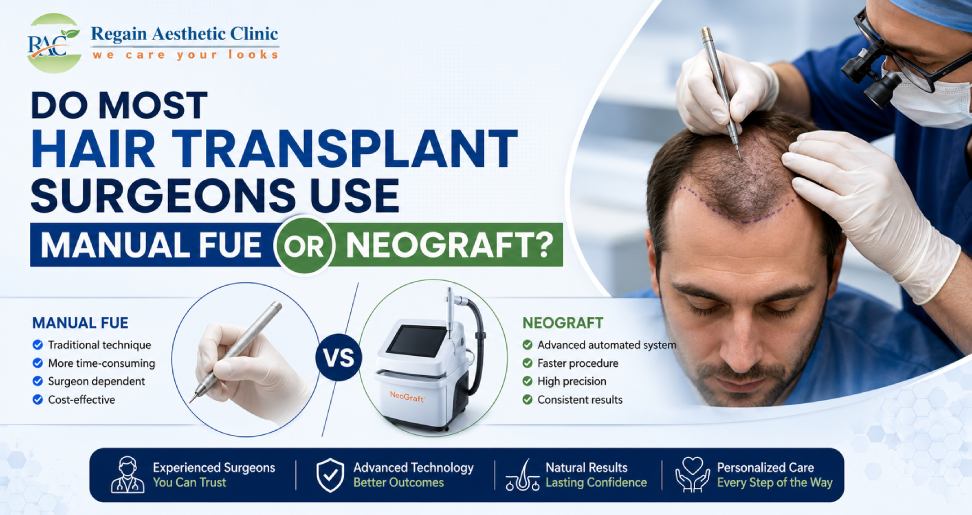
Hair loss can affect confidence, appearance, and even professional interactions. If you are considering a hair transplant, one of the most common questions you may come across is: Do most hair transplant surgeons use manual FUE or NeoGraft?
The answer is not always straightforward because both techniques are widely used in modern hair restoration. However, the choice of method can significantly impact graft quality, healing time, and overall results. Understanding the differences between Manual FUE and NeoGraft can help you make an informed decision when selecting a hair transplant clinic and surgeon.
Manual FUE vs NeoGraft: What Are They?
Before choosing a hair transplant procedure, it is important to understand how these techniques work.
Manual FUE
Manual Follicular Unit Extraction (FUE) is a technique where the surgeon manually extracts individual hair follicles from the donor area using specialized handheld instruments. The process requires a high level of precision and experience.
The surgeon controls every step of the extraction process, helping to preserve follicle integrity and reduce damage to grafts.
NeoGraft
NeoGraft is a semi-automated FUE system that uses pneumatic pressure and specialized technology to assist with the extraction and implantation of hair follicles.
The system is designed to speed up the procedure and reduce manual handling of grafts. Many clinics market NeoGraft as an advanced solution for patients seeking minimally invasive hair restoration.
Do Most Hair Transplant Surgeons Use Manual FUE or NeoGraft?
Today, many experienced hair transplant surgeons continue to prefer Manual FUE, especially when performing complex or high-density hair restoration procedures.
The primary reason is control. Manual FUE allows surgeons to adjust extraction angles, depth, and pressure according to each patient’s hair characteristics.
However, NeoGraft remains a popular option in many clinics because it can improve efficiency and shorten procedure times. Clinics performing a high volume of procedures often use NeoGraft as part of their hair restoration services.
In reality, the best surgeons focus less on the device and more on achieving natural-looking results. The surgeon’s expertise often matters more than whether Manual FUE or NeoGraft is used.
Why Many Surgeons Prefer Manual FUE
Manual FUE offers several advantages that attract experienced hair restoration specialists.
Greater Precision
Every patient has unique hair characteristics. Manual extraction allows the surgeon to adapt to variations in hair angle, thickness, and follicle depth.
Better Graft Protection
Hair follicles are delicate structures. Skilled manual extraction can help minimize follicle trauma and increase graft survival rates.
Natural Hairline Design
Creating a natural-looking hairline requires artistic skill and attention to detail. Manual FUE provides surgeons with greater flexibility during graft placement.
Suitable for Challenging Cases
Patients with curly hair, previous hair transplants, or limited donor areas may benefit from the customized approach offered by Manual FUE.
Benefits of NeoGraft
NeoGraft also offers several advantages that make it attractive for both clinics and patients.
Faster Procedure Time
The automated system can speed up follicle extraction, reducing the duration of the procedure.
Minimally Invasive Approach
NeoGraft avoids large incisions and generally results in less visible scarring compared to traditional strip harvesting methods.
Short Recovery Period
Most patients can return to normal activities relatively quickly following treatment.
Consistent Extraction Process
The technology assists with follicle harvesting, which may improve efficiency in appropriate candidates.
Which Option Provides Better Results?
Patients often focus on the technology used, but the quality of results depends on multiple factors:
- Surgeon experience
- Graft handling techniques
- Hairline design expertise
- Donor area management
- Post-operative care
An experienced surgeon using Manual FUE can achieve outstanding results. Similarly, a skilled surgeon using NeoGraft may also deliver excellent outcomes.
The most important factor is choosing a clinic with a proven track record of successful hair restoration procedures.
Questions to Ask Before Choosing a Hair Transplant Clinic
When comparing clinics, consider asking the following questions:
Who Performs the Extraction?
Some clinics delegate significant portions of the procedure to technicians. It is important to know how involved the surgeon will be during your treatment.
How Many Procedures Has the Surgeon Performed?
Experience plays a major role in achieving natural-looking outcomes.
Can I See Before-and-After Photos?
Reviewing previous patient results helps evaluate the clinic’s expertise.
What Technique Do You Recommend for My Hair Type?
A reputable surgeon should explain why Manual FUE or NeoGraft is the better option for your specific case.
What Is the Expected Graft Survival Rate?
High graft survival contributes directly to successful hair growth after transplantation.
Cost Considerations
The price of a hair transplant can vary depending on:
- Number of grafts required
- Surgeon expertise
- Clinic reputation
- Geographic location
- Technology used
While NeoGraft and Manual FUE may have different pricing structures, selecting a clinic based solely on cost can be risky. Long-term results and surgeon experience should remain top priorities.
Who Is a Good Candidate for Manual FUE?
Manual FUE may be ideal for individuals who:
- Want highly customized treatment
- Require precise graft placement
- Have complex hair characteristics
- Need corrective hair transplant procedures
- Prefer maximum surgeon involvement
Who May Benefit from NeoGraft?
NeoGraft can be suitable for patients who:
- Require larger sessions
- Prefer shorter procedure times
- Want minimally invasive treatment
- Have straightforward hair restoration goals
Making the Right Choice
When deciding between Manual FUE and NeoGraft, remember that technology alone does not guarantee success. The surgeon’s skill, experience, and artistic approach are often more important than the extraction method itself.
Many leading hair transplant specialists continue to use Manual FUE because of the control and precision it provides. Others successfully incorporate NeoGraft technology to improve efficiency while maintaining high standards of care.
The best approach is to schedule a consultation with an experienced hair restoration specialist who can evaluate your hair loss pattern, donor area, and long-term goals.
Final Thoughts
So, do most hair transplant surgeons use Manual FUE or NeoGraft? While both techniques are widely used, many experienced surgeons still favor Manual FUE for its precision, customization, and graft protection advantages. NeoGraft remains a valuable option for patients seeking an efficient and minimally invasive procedure.
If you are ready to restore your hair and confidence, choose a reputable clinic that prioritizes personalized treatment and natural-looking results. A professional consultation can help determine whether Manual FUE or NeoGraft is the best solution for your unique hair restoration journey.
Have A Look :-
