Hair transplantation has become one of the most effective solutions for people struggling with hair loss. While the surgery itself is important, proper post-operative care plays a major role in achieving successful results. One of the most common concerns among patients is how to sleep after FUT hair transplant surgery. Sleeping incorrectly can affect healing, cause discomfort, and even impact the newly transplanted grafts.
In this blog, we will discuss the best sleeping positions after a hair transplant, recovery tips, and answer common questions about what is FUT hair transplant, the FUT hair transplant procedure, and the FUT hair transplant success rate.
What Is FUT Hair Transplant?
Before understanding post-surgery care, it is important to know what is FUT hair transplant.
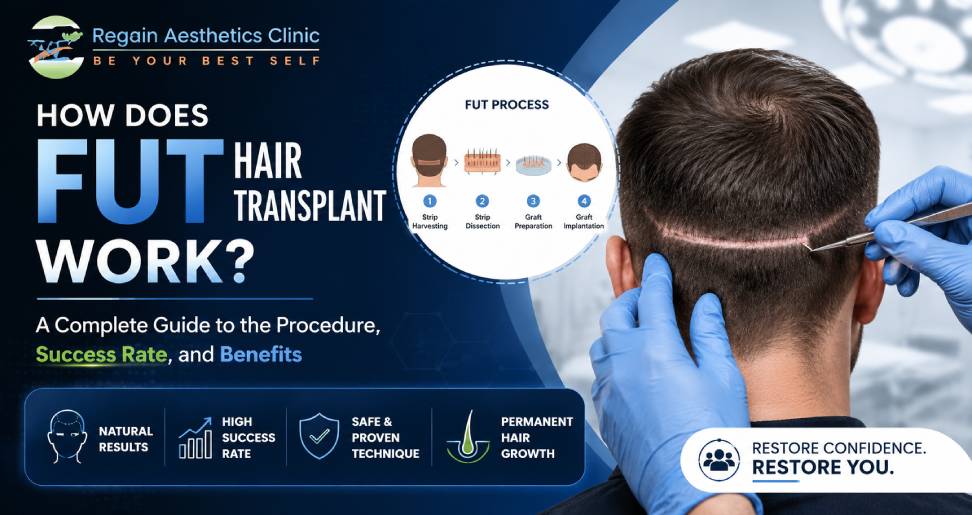
FUT (Follicular Unit Transplantation) is a hair restoration technique in which a thin strip of scalp containing healthy hair follicles is removed from the donor area, usually the back of the head. The follicles are then carefully separated and transplanted into areas experiencing hair thinning or baldness.
This method is often preferred for patients who require a large number of grafts in a single session. FUT can provide natural-looking results when performed by experienced hair transplant specialists.
At Regain Aesthetic Clinic, advanced FUT techniques are used to ensure precision, minimal scarring, and optimal hair growth outcomes.
Understanding the FUT Hair Transplant Procedure
The FUT hair transplant procedure typically involves the following steps:
1. Consultation and Assessment
The surgeon evaluates the patient’s hair loss pattern, scalp condition, and donor hair availability to determine suitability for FUT.
2. Donor Strip Removal
A small strip of scalp is carefully removed from the donor area under local anesthesia.
3. Follicle Extraction
The harvested strip is dissected into individual follicular units under a microscope.
4. Recipient Site Creation
Tiny incisions are made in the balding area according to the desired hairline and density.
5. Graft Placement
The extracted follicles are implanted into the prepared sites.
6. Recovery Phase
Patients receive detailed aftercare instructions to support healing and graft survival.
Following the FUT hair transplant procedure, proper sleep becomes one of the most critical aspects of recovery.
Why Sleeping Position Matters After FUT Hair Transplant
During the first few days after surgery, the scalp is sensitive, and the transplanted grafts need time to secure themselves in their new locations. Excessive pressure, rubbing, or accidental contact while sleeping can disrupt healing.
Proper sleeping habits help:
- Reduce swelling around the forehead and eyes
- Prevent accidental damage to grafts
- Minimize discomfort
- Promote faster healing
- Support optimal hair growth results
This is why understanding how to sleep after FUT hair transplant is essential for a successful recovery.
How to Sleep After FUT Hair Transplant
Sleep on Your Back
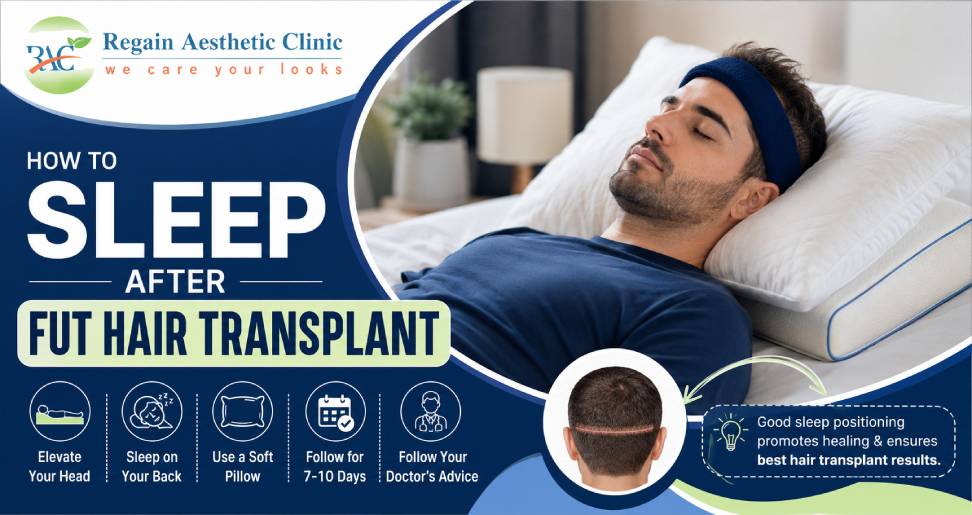
The safest sleeping position after an FUT hair transplant is lying on your back. This position prevents direct contact between the transplanted area and the pillow.
Avoid sleeping on:
- Your stomach
- Your side
- Any position that puts pressure on the grafts
Maintaining a back-sleeping position significantly reduces the risk of disturbing newly implanted follicles.
Keep Your Head Elevated
For the first 5–7 days after surgery, keep your head elevated at approximately 30 to 45 degrees.
You can achieve this by:
- Using two or three pillows
- Sleeping in a recliner chair
- Using a wedge pillow
Elevation helps reduce swelling and improves comfort during recovery.
Use a Neck Pillow
A travel neck pillow can be extremely helpful after an FUT hair transplant. It keeps your head stable and prevents you from rolling onto your side during sleep.
This simple accessory can make sleeping easier and protect the transplanted area throughout the night.
Avoid Touching the Grafts
While sleeping, avoid touching, scratching, or rubbing the recipient area. Even if mild itching occurs, it is important to resist the urge to scratch.
The grafts are delicate during the first few days and require protection.
Follow Your Surgeon’s Instructions
Every patient is unique, and recovery recommendations may vary. Always follow the specific aftercare guidelines provided by your hair transplant specialist.
At Regain Aesthetic Clinic, patients receive personalized post-operative instructions to ensure a smooth and comfortable recovery.
How Long Should You Sleep Elevated?
Most surgeons recommend sleeping with your head elevated for approximately 5 to 7 days after surgery.
In some cases, depending on swelling and healing progress, elevation may be advised for up to 10 days.
Patients should continue following their surgeon’s recommendations and attend scheduled follow-up appointments.
Common Sleeping Mistakes to Avoid
Sleeping Flat Immediately After Surgery
Sleeping completely flat can increase swelling around the forehead and eyes. Elevation helps manage fluid accumulation and promotes healing.
Sleeping on the Transplanted Area
Direct pressure on grafts can interfere with healing and may affect graft survival.
Ignoring Post-Operative Instructions
Many complications can be avoided simply by following aftercare guidelines carefully.
Using Dirty Pillow Covers
Clean bedding helps reduce the risk of infection. Change pillowcases regularly during the recovery period.
Additional Recovery Tips After FUT Hair Transplant
Besides proper sleep, consider these important recovery practices:
Stay Hydrated
Drinking plenty of water supports healing and overall recovery.
Avoid Strenuous Activities
Heavy exercise, gym workouts, and strenuous physical activities should be avoided for at least two weeks or as advised by your surgeon.
Avoid Smoking and Alcohol
Smoking and alcohol can negatively affect blood circulation and healing. Avoid them during the initial recovery phase.
Protect Your Scalp
Avoid direct sunlight and wear protective head coverings only if approved by your surgeon.
Take Prescribed Medications
Follow your prescribed medication schedule to manage discomfort and reduce infection risk.
FUT Hair Transplant Success Rate
One of the reasons FUT remains a popular hair restoration method is its impressive outcomes. The FUT hair transplant success rate is generally high when performed by qualified specialists and supported by proper aftercare.
Most studies report graft survival rates ranging between 90% and 95% under ideal conditions. Factors influencing the FUT hair transplant success rate include:
- Surgeon experience
- Quality of donor hair
- Patient health
- Post-operative care
- Adherence to recovery instructions
Sleeping correctly during the initial recovery period contributes significantly to protecting transplanted grafts and maximizing results.
Why Choose Regain Aesthetic Clinic for FUT Hair Transplant?
When considering a hair transplant, choosing the right clinic is just as important as selecting the right procedure.
Regain Aesthetic Clinic is committed to providing advanced hair restoration treatments with a focus on patient safety, comfort, and natural-looking outcomes. The clinic offers:
- Comprehensive hair loss evaluations
- Advanced FUT hair transplant techniques
- Personalized treatment plans
- Expert post-operative guidance
- Dedicated patient support throughout recovery
From the initial consultation to long-term follow-up care, the team at Regain Aesthetic Clinic helps patients achieve their hair restoration goals with confidence.
Conclusion
Understanding how to sleep after FUT hair transplant is a crucial part of ensuring a successful recovery. Sleeping on your back, keeping your head elevated, using a neck pillow, and avoiding pressure on the grafts can significantly improve healing and protect your transplant results.
Knowing what is FUT hair transplant, understanding the FUT hair transplant procedure, and following proper aftercare recommendations can help maximize the FUT hair transplant success rate. With expert care and guidance from Regain Aesthetic Clinic, patients can enjoy a smooth recovery and long-lasting, natural-looking hair restoration results.
If you are considering a FUT hair transplant, consult with the specialists at Regain Aesthetic Clinic to learn more about your treatment options and personalized recovery plan.